
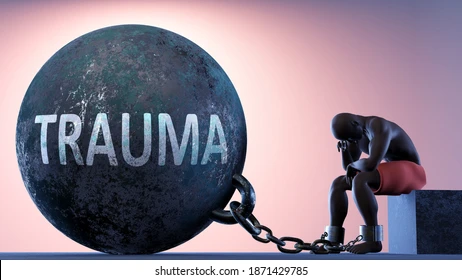
There are times in life so weighty, so discombobulating that they feel like they are weighing us down. Trauma can make the world seem a smaller, colder and more fragile place. And why read it? A Light in the Darkness as it makes achingly clear, those are sometimes precisely the experiences that break open and reshape us. When trauma is recognized, rather than run away from, it can make one of life’s harshest yet most profound teachers. Nor is Sanborn’s story just one of suffering — it’s also one of transformation. It’s about learning to see the bits and pieces of ourselves spread across painful memories, then gathering them up and making something stronger, more aware, more compassionate. In that regard, she also gently encourages readers to reframe their own injuries with a kinder and more courageous consciousness. She reminds us that dark is not always a place of loss… sometimes it’s the place we begin to understand anew.
The Lessons Hidden in Pain
Trauma is frequently thought of as something to “get over,” as if it were a physical object obstructing the way forward. Yet as the memoir itself suggests, trauma is less a wall and more a terrain — something you travel through, not around. It molds you in ways that you don’t always get to see when you are inside of it. A Light in the Darkness captures the notion that pain is a form of communication. It tells us truths about who we are, what we love and how much pain we can bear. It has revealed vulnerability that we didn’t realize was there before, but also strength that many of us didn’t think possible. When Sanborn covers her childhood hardships — destitution, turbulence, emotional scarring — she isn’t merely telling tales of anguish. She examines them. She wants to know what she meant to them, how they “made” her and what they revealed inside of her. Looked at that way, trauma is no longer a mere survival narrative but an illumination. Pain, in her telling, is not just hurtful. It teaches.
Seeing Ourselves in the Darkness
Sanborn’s writing is powerful in its relatability. Even if our circumstances look nothing like hers on the surface, virtually everyone has experienced some trauma — loss, abandonment, shame, violence, mental illness, financial struggle or family dysfunction. The scale and shape of trauma may vary, but its emotional gravity is truly human. In her memoir, Sanborn makes room for readers to recognize themselves. Her descriptions are vivid, not for the sake of dramatizing her experience, but to bring us into the multi-dimensional inner world of someone who is very much up against nature and trying desperately to reach toward light. That’s why her story remains long after the book is finished: it forces us to reexamine our histories in a way that’s gentle and honest, which somehow feel at once comforting and challenging. Her experience teaches us that trauma is not a weakness. It is evidence of having lived, having felt and having survived. And once readers know that as truth, they can start reframing their own painful experiences — not as stains on their lives but chapters that forged their strength.
The Strength We Don’t Know We Have
There’s a fallacy that strength is loud — brash, gritty, defiant. But the strength that trauma imparts is quieter. It happens in the seconds we force ourselves out of bed despite the heaviness of grief, reach back when kindness is thrown at us as cruelty and love though we have been abandoned. Sanborn’s memoir is rich with these quiet, potent moments. She tells the story of her parents and sister not as unsullied heroes but as flawed individuals who loved, fought and persevered. Their weaknesses, their secrets and their labors join her vision of strength: not as performance but instinct. We are not meant to have either this strength, or such strength as there can be all at once. It builds slowly, often invisibly. We only see it, when we look back, and know how far we’ve traveled.
The Gift of Reflection: Transforming Suffering Into Wisdom
The real transformation in Sanborn’s story isn’t one of mere trauma survival — it is, rather, reflective. Reflection is what transforms suffering into wisdom. It enables us to look at our pain with curiosity instead of disdain. The introspection also shows a number of important lessons:
- Trauma reveals the truth about what are emotions actually need.
What we needed in the darkest hours is what we want now — stability, affection, trust and belonging.
- Trauma reveals patterns.
In looking back, we’re able to figure out why we do the things we do, why certain responses are triggered in us and how old wounds impact our present behaviors.
- Trauma clarifies our values.
Those of us who have walked in the dark seem to understand even more the beauty of light. Appreciation, caring and realness are whats important to them.
- Trauma builds compassion.
And understanding our own suffering allows us to be more compassionate about the suffering of others. We become softer, we learn to wait, more human. Sanborn’s memoir is proof of the power of reflection. She doesn’t escape her past; she turns to face it, studies it and allows it to drive toward self-awareness and healing.
Family: A Reflection of Strength and Weakness
Family is a huge theme, A Light in the Darkness. Sanborn brilliantly depicts her parents and her sister with the brutal honesty known only to family — and a love tempered by their flaws. Its portrayal has struck a chord with readers because families across the world bear untold burdens, concealed hurts and complex relations. In exploring relationships with her family, Sanborn reveals an important fact: strength isn’t the absence of dysfunction — it’s love despite it. Her observations inspire others to look at their own families more critically with nuance. Trauma warps our memories, causing us to obsess over hurt or betrayal. But the distance lets us see that human element in those who raised us — people who fought, failed, loved and had limited capacity for doing their best. By doing so, the memoir is not only a personal history but also a guide to understanding the emotional inheritance that casts all families.
Finding Our Own Light
A Light in the Darkness is, ultimately, a survival story — and, crucially, an awakening. It implies that we don’t run from darkness by denying it ever existed. We outrun it by looking straight at it and stepping through it anyway. Darkness as a teacher So in darkness, we learn:
- stop blaming ourselves for suffering,
- stop hiding from our past,
- stop minimizing our pain,
and begin acknowledging the strength that got us through it. The memoir invites readers to follow its example and take an inward, rather than outward journey — to regard their traumas not as sources of shame but as wellsprings of wisdom. Each battle, each heartache, each shred of the past keeps something that may help light up our future.
Conclusion:
Trauma is not something I would wish on anyone. But once it arrives, it already becomes part of who we are. What Michelle Sanborn is showing us is that does not have to define us in destructive ways. It can make us people who know themselves better, who love harder and live with a quiet ferocity. When darkness begins to teach us, we stop appearing to be victims of our past and start appearing as survivors—individuals with stories that should be told and lessons that should be passed on. And it’s in acknowledging this that we see our own light, a light that isn’t here to pull us away from the dark, but through it.